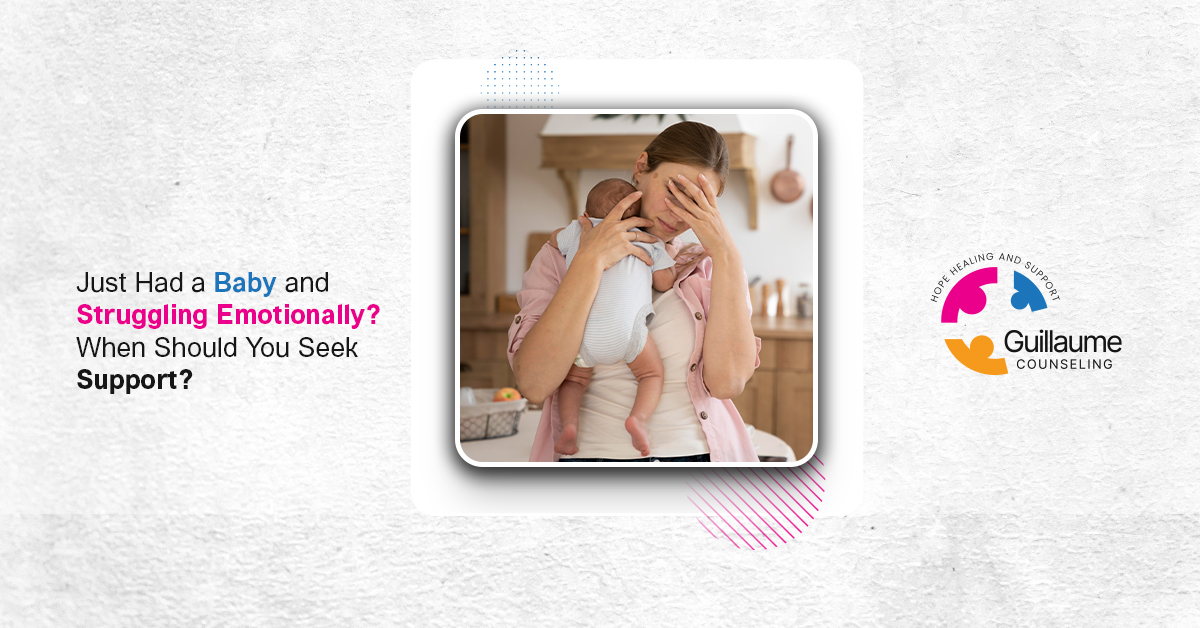
Welcoming a new baby can feel like one of life’s most meaningful moments. Many parents feel deep love, joy and pride, especially when being a first-time mother.
However, together with these feelings, one may also be overwhelmed, exhausted, anxious, or saddened. Such ambivalent feelings are more normal than some individuals may think.
If you are struggling emotionally after childbirth, you are not alone. And you are not failing.
Guillaume Counseling can help families during and after pregnancy, guiding them through their unique emotions and knowing when to seek help.
What Is the Postpartum Period?
The period after giving birth is called the postpartum period, during which your body, feelings and daily life go through major adjustments. There is rapid hormonal change, disturbed sleeping, and your roles are swapped during the course of the night.
Even though the society tends to think that it is a time of pure happiness only, the situation is not that simple. Being overwhelmed in this transition does not imply that something is wrong with you; it simply means you are a human being.
Why Do New Parents Feel So Emotional?
After birth, your body experiences intense hormonal changes. At the same time, you may be:
- Physically recovering
- Sleep deprived
- Adjusting to a new identity
- Feeling pressure to “do everything right”
Many parents find themselves thinking:
- Am I a good parent?
- Why am I crying a lot for no reason?
- Why do I feel disconnected or numb?
- Why does this feel harder than I expected?
These thoughts can feel frightening, but they are surprisingly common. Understanding the risk factors for postnatal depression, such as lack of sleep, previous mental health struggles, limited support, or high stress, can help you recognize when extra care may be needed.
What Feelings Are Common After Birth?
Many parents experience what is often called the “baby blues.” This can include:
- Mood swings
- Crying easily
- Feeling overwhelmed
- Irritability
These feelings usually begin within a few days after birth and often improve within two weeks.
However, some parents may have more severe long-lasting symptoms and this may also include:
- Persistent depression or despair.
- Excessive worry or panic
- Feeling emotionally numb
- Strong feelings of guilt or shame
- Difficulty bonding with the baby
- Feeling afraid to be alone with the baby
These can be symptoms of postpartum depression or postpartum panic disorder. These are health-related, medical and emotional health conditions, not individual failures. Recovery can be achieved with proper support.
How Long Does Postpartum Depression Typically Last?
Postpartum depression can last for weeks or even months if left untreated. Fortunately, many parents report considerable improvement after obtaining appropriate emotional and professional assistance. Timely care usually results in quicker and more effective recovery.
When Should You Seek Support?
When difficult emotions continue over a period of more than two weeks or unless they are interfering with your normal day activities, then it may be time to get some help. Consider contacting in case you feel:
- Feeling sad most of the day
- Repeated crying which is uncontrollable
- Feeling empty, numb, or disconnected
- Difficulty sleeping even when the baby sleeps
- Constant worry or racing thoughts
- Loss of interest in things you once enjoyed
- Frequent anger or irritability
- Feeling like you are failing as a parent
These signs do not mean you are weak. They mean you deserve care.
Consider a postpartum depression assessment with a professional to know what support might be offered.
Support Is Not Only for Mothers
Some people may say women are too emotional after having a baby, but emotional struggles after a baby’s arrival affect all parents.
Fathers, partners, and non-birthing parents may also be stressed, anxious, sad, and emotionally withdrawn as well. Many feels pressure to stay strong and may hide their struggles.
Every parent deserves care, understanding and support.
How Counseling Can Help
Discussing with a mental health professional can help you:
- Make sense of your emotions
- Feel heard and understood
- Acquire healthy coping mechanisms
- Less anxiety and demoralization
- Enhance parental confidence
- Enhance your partner communication
- Feel hopeful again
You don’t need perfect words to begin. Saying, “I’m not okay” is enough.
Supporting Healing Alongside Professional Care
In addition to therapy or medical support, natural ways to treat postpartum depression recovery
- Prioritizing rest when possible
- Asking for help from family or friends
- Eating nourishing foods
- Gentle movement (such as walking)
- Spending time in natural light
- Talking openly about emotions
- Practicing relaxation or breathing exercises
These practices can be helpful, but in case of severe symptoms, it is not a substitute of professional care.
Compassionate, Culturally Respectful Support
When parents understand themselves in their cultural, spiritual, and family values, many of them can benefit the most.
Guillaume Counseling focuses on providing culturally responsive care to diverse groups of people, such as immigrant families, multicultural families, LGBTQ+ parents and individuals of faith. Our multilingual services can also help the parents feel safe, respected, and understood.
A Message of Hope
Struggling after having a baby doesn’t mean you’re broken or a bad parent, it means you’re navigating a big life change.
Having the right care, support, and compassion is a way to heal. You need encouragement at this time of transition.
Guillaume Counseling offers support with compassion and respect. We concentrate on the care of pregnancy and postpartum, which might make parents feel less isolated. Our services support individuals, couples and families.
Contact us to begin your path to healing.
FAQs
What is a setback after pregnancy?
A setback may be taken to mean that one is feeling emotionally down, physically exhausted, or mentally exhausted due to childbirth. It is not failure, but just the amount of readjustment your body and mind are experiencing.
Is it normal to feel disconnected from my baby?
Yes, some parents struggle with bonding at the beginning. This may be more prevalent with sleeplessness, hard childbirths or depression. The bonding could enhance over time with encouragement.
Disclaimer: We are Healers. We work with people from all walks of life. We are not politicians, activists, evangelists, or preachers. We are Healers. We strive to hire employees of diverse backgrounds to serve a community who is diverse socially, politically, economically, religiously, racial, ethnically, and culturally.

linezolid cost canada
linezolid cost canada
antibiotics online purchase
antibiotics online purchase
vibramycin for rosacea
vibramycin for rosacea
propecia generic
propecia generic
sertraline 25mg for sleep
sertraline 25mg for sleep
metoprololo
metoprololo