Stress is something most people experience at different points in life. It might start very subtly, little things, daily, or the daily burden and eventually escalate into something bigger. In the long run, stress, if uncontrolled, may have an impact on mood, energy levels, sleep and well-being.
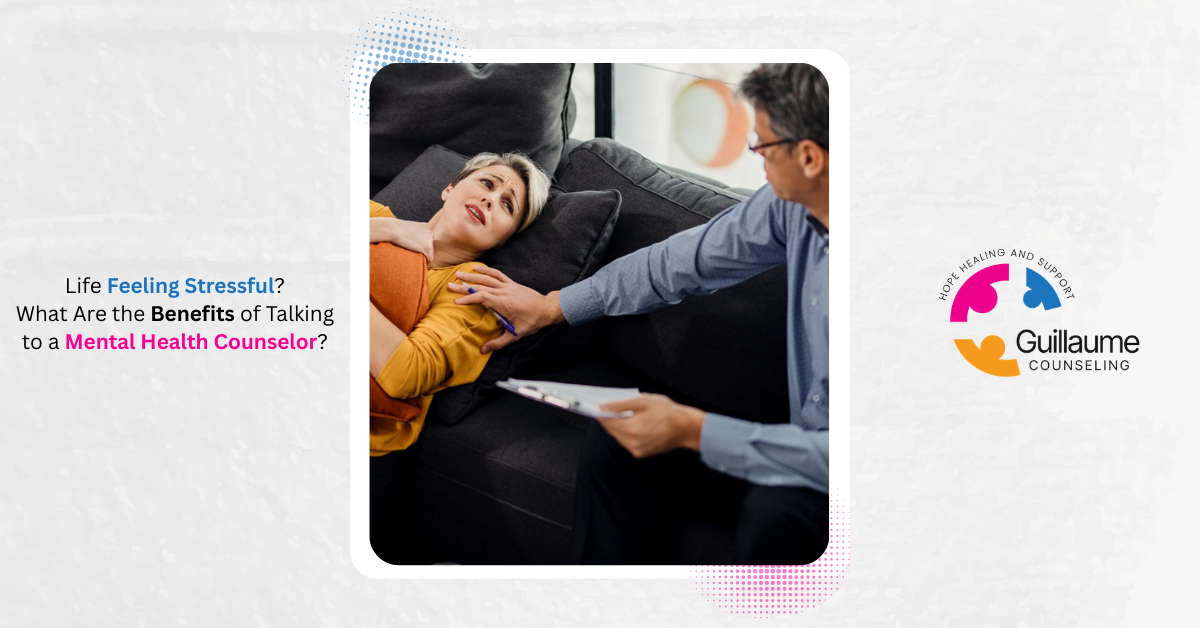
Talking to a mental health counselor can provide meaningful support during these times. Counseling offers a safe, confidential space to explore your feelings, better understand your challenges, and develop healthier ways to cope.
Guillaume Counseling may support individuals in managing stress through professional guidance and compassionate care, helping them work toward clarity, balance and emotional strength.
Why Life Can Feel Stressful
Today’s life involves various demands that often arise at once. A balance between responsibilities may be tiresome and there may be no time to relax or rejuvenate.
Some common causes of stress include:
- Work or school pressure
- Family duties
- Money problems
- Health worries
- Social expectations
When stress builds up, a person may feel:
- Tired
- Irritated or upset
- Unable to focus
- Trouble sleeping
- Overwhelmed or stuck
Talking to someone can help you slow down and understand your feelings better.
What Does a Mental Health Counselor Do?
A mental health counselor gives you a safe space. It’s non-judgmental. You can express yourself freely here.
In a counseling setting, you may experience:
- A safe and confidential space
- Active listening without judgment
- Guidance in exploring your experiences
- Support in identifying potential stress triggers
- Assistance in developing practical coping strategies
At Guillaume Counseling, each person is treated with care. Sessions are made to fit each person’s needs and pace.
Key Benefits of Talking to a Mental Health Counselor
1. Feeling Heard
Many people keep their stress to themselves due to limited support or concerns about being misunderstood.
Counseling provides:
- A space where your voice can be heard
- A supportive presence that acknowledges your experiences
- An opportunity to express emotions freely
This experience may help reduce emotional burden and create a sense of relief.
2. Understanding Your Stress
Stress is not always immediately obvious. Sometimes, root factors may be hidden within daily routines and patterns.
A counselor can help you:
- Recognize patterns in thoughts and behaviors
- Identify potential triggers that increase stress
- Gain a clearer understanding of emotional responses
Building this awareness may be a key first step toward substantial change.
3. Developing Healthy Coping Strategies
Stress may not be removable, but it may be managed in a better manner.
Counselors can teach simple ways to handle stress, such as:
- Deep breathing
- Relaxing your body
- Managing time
- Setting limits with others
These strategies fit individual lifestyles and apply to real life.
4. Improving Emotional Awareness
Many individuals face feelings without thoroughly knowing them.
Through counseling, you may:
- Learn to identify and name emotions
- Explore what may trigger certain feelings
- Respond more thoughtfully rather than react impulsively
This awareness can help with emotional control. It also leads to better decisions over time.
5. Learning How to Set Healthy Boundaries
Boundary issues can also be a source of higher stress and burnout.
Counseling can support you in:
- Understanding personal limits
- Practicing saying no when appropriate
- Prioritizing your well-being
- Protecting your time and energy
Boundary-setting may develop into a more instinctive and empowering skill with practice.
6. Reducing Feelings of Isolation
Stress can feel very lonely. It’s hard when you think no one gets it.
Counseling may provide:
- A sense of connection
- Emotional support
- An opportunity to feel accompanied through challenges
You don’t have to navigate difficult experiences alone.
7. Getting Clear Thoughts
When pressure reaches its height, thoughts may seem disorganized or daunting.
Counseling can help you:
- Slow down and organize your thoughts
- Consider situations from different perspectives
- Break concerns into smaller, manageable steps
This process may support clearer thinking and more confident decision making.
8. Building Inner Strength
Resilience can be defined by people as the ability to adapt and deal with life difficulties.
Through counseling, individuals can:
- Handle pressure better
- Adapt to tough situations
- Build confidence for future challenges
Resilience builds over time and may improve with continuous support and regular practice.
What to Expect in a Counseling Session
Each counseling session is unique and guided by individual needs.
You may:
- Discuss current challenges
- Explore past experiences
- Learn coping techniques
- Reflect on personal growth
Some sessions may be more thoughtful, while others can prompt intense emotional investigation. Both are essential elements of the process.
Counseling can be challenging, yet it fosters self-awareness, understanding and enduring wellness.
Why Choose Guillaume Counseling
At Guillaume Counseling, we recognize that stress can be complex and influenced by many factors.
We offer:
- A kind and caring environment
- Personalized counseling tailored to individual needs
- Practical tools that can be applied in daily life
- A focus on ongoing emotional growth and understanding
Our approach is to assist people in making a step toward feeling rooted, balanced and supported in their lives.
Start Your Journey toward Balance Today
If stress is making life hard, help is available. Talking to a counselor can help you understand your feelings and learn ways to manage stress.
At Guillaume Counseling, we are here to support you with care, respect and professionalism.
Taking the first step to reach out can open the door to a supportive conversation that may help you move toward a healthier and more balanced life.
FAQs
Can counseling solve all my problems?
Counseling can help you know more about your problems and deal with them. But it cannot fix everything and progress takes time.
Will the counselor tell me what to do?
A counselor does not usually give direct instructions and orders. Instead, they can instruct you by posing questions, giving observations and assisting you in exploring the potential possibilities so that you can come up with your own informed choices.